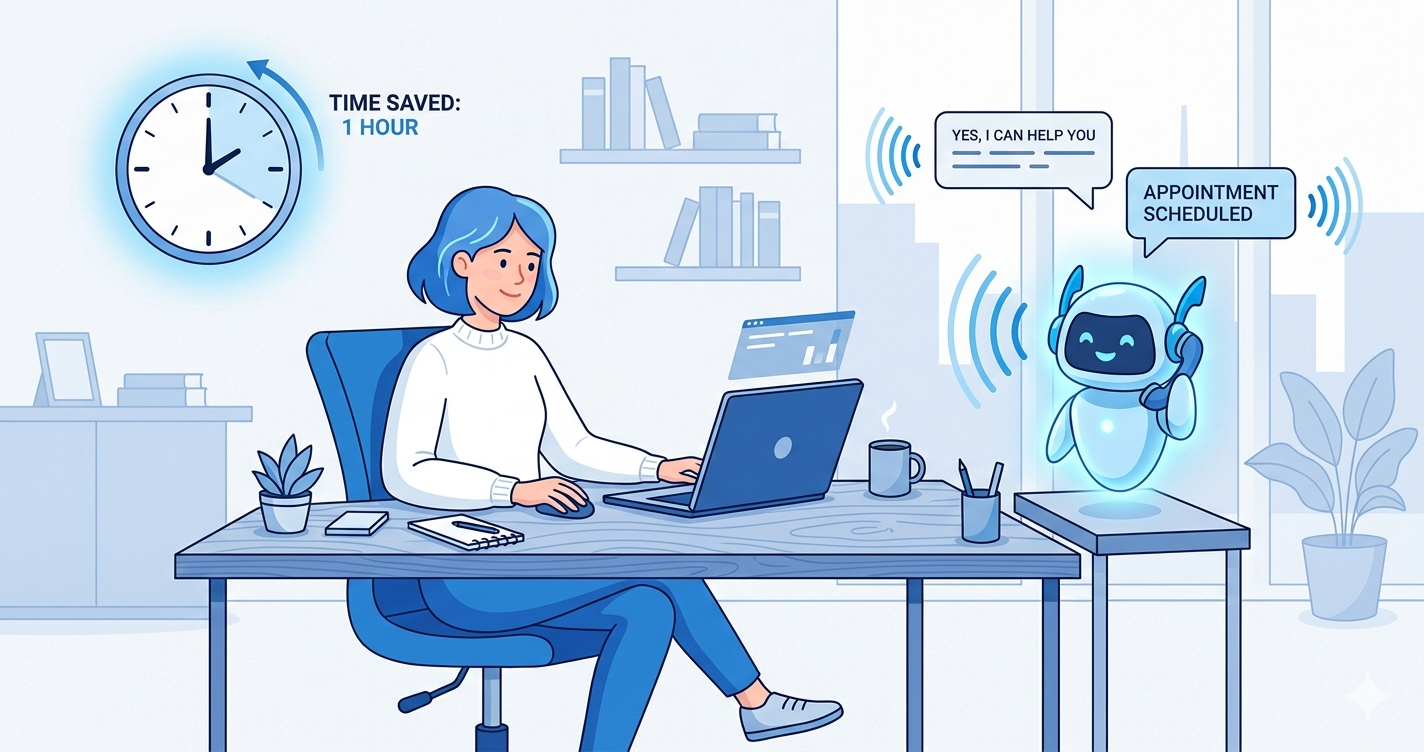
AI calling is the use of artificial intelligence to conduct a phone call on your behalf. Instead of you dialing, waiting on hold, navigating a menu, and explaining your request to a representative, an AI voice agent handles the entire interaction from start to finish.
The call is real. The number being dialed is real. The outcome — a confirmed appointment, a cancelled subscription, a resolved complaint — is real. What changes is that you are not the one doing the talking.
How AI calling works
The basic flow is straightforward. You describe the task: call this number, say this, get this result. The AI places the outbound call, listens to what is said on the other end, and responds in natural spoken language. It can navigate automated phone menus by pressing digits, answer verification questions, handle hold queues, and adapt when the conversation takes an unexpected turn.
Modern AI calling systems use large language models for understanding and generating responses, combined with text-to-speech and speech recognition for the actual audio. The result is a voice that sounds natural enough to hold a real conversation and a system smart enough to stay focused on the goal even when the call does not go exactly as expected.
What AI calling is used for
Most practical use cases fall into a handful of categories.
Bookings and reservations. Scheduling a doctor visit, dentist appointment, haircut, or restaurant table is a routine call that AI handles well. The goal is specific, the conversation is predictable, and the outcome is easy to confirm.
Cancellations. Ending a subscription, closing an account, or opting out of a service often requires a phone call by design. Businesses make this intentionally friction-heavy. AI calling absorbs that friction so you do not have to sit through a retention script.
Customer service follow-ups. Checking the status of a refund, chasing an order, or escalating a complaint all involve navigating hold queues and repeating information. These are time-consuming but not complicated, which makes them good candidates for automation.
Information requests. Confirming business hours, asking about pricing, checking whether a prescription is ready, or getting a rough contractor quote are all calls where you need a specific piece of information and nothing more.
Why AI calling is different from robocalling
The distinction matters and is worth being clear about. Robocalling is outbound mass dialing, usually unsolicited, often for marketing or scams. AI calling in the context of personal productivity is the opposite: it is a single call you choose to make, to a number you have a legitimate reason to contact, on your behalf.
The technology shares some surface similarities. The ethics and intent are completely different. Consumer AI calling tools are designed around legitimate personal tasks — not mass outreach, not sales, not harassment.
The limits of AI calling
AI calling works best when the goal is specific and the conversation is reasonably predictable. It is less suited to calls that require genuine judgment, nuanced negotiation, or a personal relationship. A detailed dispute over a medical bill, a complex legal matter, or a highly emotional conversation will often benefit from a human being directly involved.
There are also practical limits. Some businesses have phone systems that behave unpredictably. Background noise, bad audio quality, transfers to the wrong department, and scripts that go off in unexpected directions all happen in the real world. Good AI calling systems handle many of these gracefully. No system handles all of them perfectly.
Who uses AI calling
The people who find it most useful tend to share one characteristic: they have something better to do with their time or energy than sit on hold.
Busy professionals use it because admin calls accumulate quickly and a 15-minute hold queue in the middle of a workday is a real cost. Parents use it because the mental load of household admin is already high and every small task competes with ten others. People who find phone calls stressful — whether from anxiety, hearing challenges, or simply disliking confrontational conversations — use it because it removes the emotional cost entirely.
There is also a large group of people who are perfectly capable of making the call and simply prefer not to. That is a legitimate reason. AI calling exists in the same category as every other tool that handles a task so you do not have to.
Where PhoneCallFor.me fits in
PhoneCallFor.me is built for everyday personal use. You tell it who to call and what you need. The AI handles the call and returns a summary of what happened. There is no complex setup, no subscription required, and no need to understand how the technology works under the hood.
The idea is that it should feel less like using AI and more like getting something done. If you have a call you have been putting off, that is probably the best place to start.