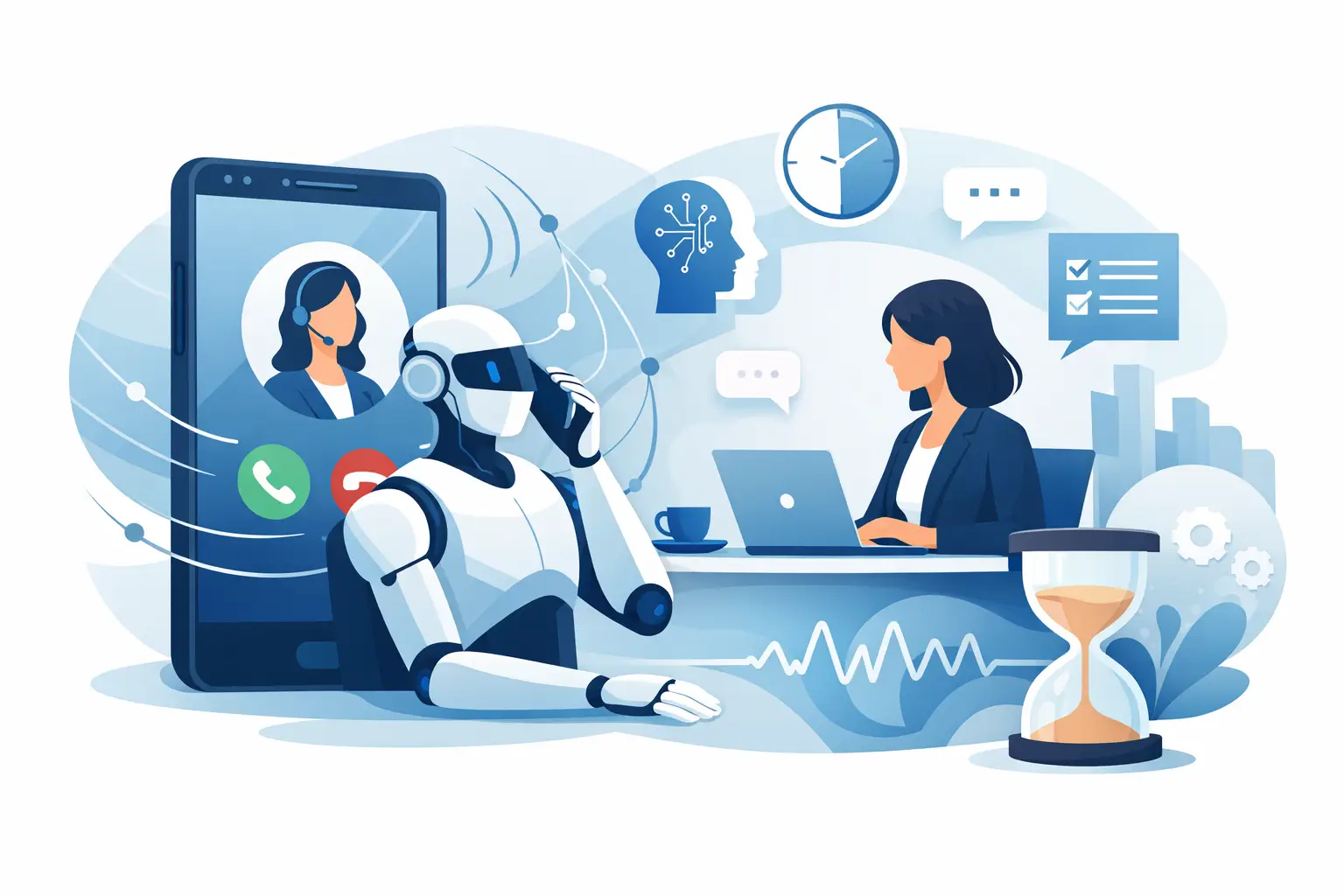
That call you keep putting off is probably not hard. It is just annoying. Maybe it is a cancellation request, a prescription pickup check, a contractor quote, or the classic customer service maze where you press 3, then 5, then somehow end up back at the start. This is exactly where ai phone call automation starts to feel less like a novelty and more like a very sensible life upgrade.
For most people, the problem is not that calls are impossible. The problem is that they are mentally expensive. They interrupt your day, force you into awkward conversations, trap you on hold, and somehow turn a two-minute task into a 40-minute irritation. If software can handle the repetitive parts of email, scheduling, and payments, it makes perfect sense to ask whether it can handle calls too.
What ai phone call automation actually does
At its simplest, ai phone call automation places a call, navigates the conversation, and works toward a specific outcome without requiring you to do the talking yourself. That might mean booking an appointment, confirming business hours, asking for pricing, following up with support, or cancelling a service you no longer want.
The useful version of this is not a gimmicky robot voice calling random numbers. It is a practical system designed around real tasks with clear instructions. You tell it what you need, it makes the call, responds in real time, and returns the result. That is the difference between novelty tech and something people actually use on a Tuesday afternoon when they would rather do literally anything else.
This matters because phone calls remain one of the last stubbornly manual parts of everyday admin. Plenty of businesses still do not offer proper self-service online. Others hide simple requests behind phone trees, hold music, and retention scripts. AI is finally good enough to absorb a lot of that friction.
Why people want AI phone call automation now
The demand is not really about loving AI. It is about hating avoidable hassle.
People are busy, yes, but that is only part of it. A lot of routine calls also carry emotional drag. Cancelling a subscription means dealing with a trained retention rep. Calling a doctor or pharmacy can feel stressful when you are already tired. Asking for quotes from contractors is repetitive and weirdly draining. Chasing an airline, landlord, or utility provider is a special kind of pointless misery.
AI phone call automation appeals because it removes three things at once: time waste, social friction, and procrastination. Those are not abstract benefits. They are the actual reasons people avoid calls for days.
There is also a practical shift happening. Consumers are far more comfortable delegating tasks to software now, as long as the process is clear and the result is reliable. Nobody needs a lecture on machine learning. They need to know one thing: can this handle the call so I do not have to?
Where AI phone call automation works best
Not every call should be automated. But many of the most annoying ones are perfect for it.
The sweet spot is high-friction, low-value communication. Calls where the stakes are real enough that you need an outcome, but not so sensitive or complex that you want to personally manage every second. Booking an oil change, confirming a reservation, checking whether a prescription is ready, requesting a refund update, getting a rough repair quote, or cancelling a gym membership all fit nicely into that category.
These calls share a pattern. They are repetitive, scripted, and outcome-driven. The business on the other end has seen the same request hundreds of times. You are not trying to build a relationship. You are trying to get something done.
That is why consumer-focused services such as PhoneCallFor.me make sense. They are built around everyday errands people delay, not enterprise theory or call-center jargon. The value is simple: the bot handles the call while you get on with your day.
Where it depends
There are limits, and they matter.
AI phone call automation is strongest when the goal is clear. If you need a nuanced legal discussion, a highly emotional conversation, or a negotiation where reading subtle human signals is everything, handing off the call may not be the best move. Some situations still benefit from your judgment, your tone, or your authority as the person directly involved.
It also depends on the business being called. Some companies have rigid systems. Others have messy phone trees, poor audio quality, or staff who go off-script in ways that complicate the conversation. AI can handle a lot, but real-world calling is not a laboratory. Sometimes the fastest route is still a human stepping in.
That is not a weakness unique to AI. It is just how phone calls work. Anyone who has spent 25 minutes trying to explain a simple request to the wrong department already knows this.
What makes a good AI phone call automation service
If you are evaluating a service, the flashy part is not the main thing to look at. The basics matter more.
First, it should be extremely easy to start. If setting up the call takes longer than making it yourself, the whole pitch falls apart. The best tools ask for only what is needed: who to call, what to say, and what outcome you want.
Second, it should handle real-time conversation, not just a rigid script. Businesses interrupt, ask follow-up questions, transfer calls, and introduce random complications. Good automation needs enough flexibility to keep moving toward the goal.
Third, pricing should match actual use. Consumers making occasional admin calls do not want to commit to an expensive subscription just to cancel a streaming service once a month or check on a booking. Pay-per-use models feel more honest because they match the task at hand.
Finally, the result should be clear. You should know what happened, whether the task was completed, and whether any next step is required from you. Convenience dies quickly when the outcome is fuzzy.
The real benefit is not speed alone
Yes, ai phone call automation can save time. But time is only half the story.
The more underrated benefit is reduced mental load. There is a noticeable difference between doing a task and carrying a task around in your head for three days because you do not want to make the call. Delegation clears that background stress.
It also helps with phone anxiety in a very practical way. Not everyone hates calls, but plenty of people dislike the performative side of them. The awkward pauses, the sales pushback, the fear of saying the wrong thing, the low-level dread of dealing with irritated support agents. Automating the interaction is not laziness. It is efficient avoidance of an experience that adds zero value.
And sometimes that emotional relief is the whole point. If a service can cancel the thing, chase the refund, or sit on hold so you do not have to, that is useful even if the raw time savings are modest.
Will AI phone call automation replace people?
For routine personal admin, it will replace a lot of unnecessary human effort. That is not the same as replacing all human communication.
Most consumers do not want AI to handle every conversation in their lives. They want it to handle the dull, repetitive, avoidable ones. The calls that have become chores rather than meaningful interactions. There is a big difference between asking software to fight through a customer service queue and asking it to call your grandmother.
Businesses will adapt too. Some will improve self-service options. Some will optimize for AI-assisted callers. Some will keep phone support messy for as long as possible because friction still works in their favor, especially in cancellations. That tension is real.
But from the consumer side, the trend is obvious. When a task is repetitive, rules-based, and annoying, people will delegate it the moment the tool is good enough.
Who gets the most value from it
Busy professionals get obvious value because admin tends to pile up in the middle of the workday. Parents benefit because every small task competes with ten others. Freelancers and students like it because time and focus are both limited, and calling during office hours is often inconvenient. People with phone anxiety or hearing-related challenges may find it even more useful.
Then there is the largest group of all: people who are perfectly capable of making the call and simply do not want to. That is a valid use case. You do not need a dramatic reason to stop doing tedious things manually.
The strongest products in this category understand that reality. They do not frame delegation as futuristic magic. They frame it as relief.
AI phone call automation is at its best when it feels boring in the best possible way. You submit a task, the call gets handled, and your day moves on. No hold music. No awkward back-and-forth. No 4:47 PM realization that you still have not called the pharmacy.
That is probably the clearest test for whether this technology matters. If it removes one more annoying task from your plate without creating a new one, it has earned its place.